
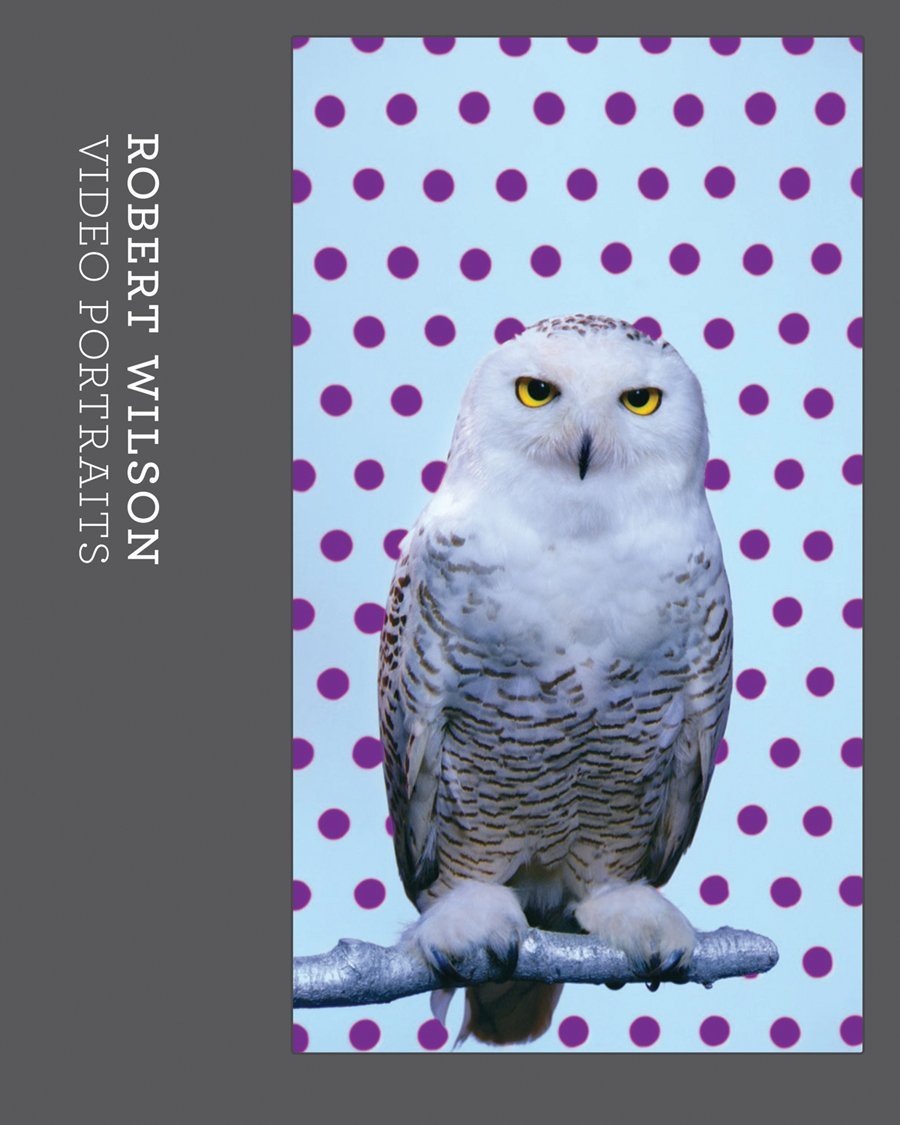
Robert Wilson: Video Portraits
Edited by Peter Weibel
Verlag der Buchhandlung Walther König, 2011. 223 pp.; ISBN: 9783865608505
When Robert Wilson speaks about his video portraits, he begins by describing his desire to create aesthetic and spiritual spaces. Characterized by an intense visual and auditory language, Wilson’s “performers” possess a surprisingly sensual presence. More than thirty of these poetic works were on view at the ZKM (Karlsruhe, Germany). They featured theatrical stagings of Hollywood stars and personalities such as Brad Pitt, Caroline of Monaco, Isabella Rossellini, Salma Hayek, Dita von Teese, and Robert Downey Jr., as well as animals and unknown passersby.
Wilson’s artistry is shaped by a series of unique personal experiences as well as by the defining influences of the 1960s, which also found their way into his legendary theatrical productions beginning in the 1970s. Wilson created his first video portraits of prominent figures such as Louis Aragon, Pontus Hultén, and Helene Rochas, as well as of passersby and animals, as early as the 1970s. In his most recent portraits, beginning in 2004, he utilized the technical capabilities of high-definition resolution, which allowed him to further refine the richness of his visual and theatrical language.
Movement, gestures, makeup, costumes, sets, and lighting, as well as the styles of high culture and pop culture, and both traditional and new media—painting, design, music, opera, dance, theater, photography, television, film, etc.—all come together in Wilson’s video portraits. The figures depicted draw in part on their own biographical details and in part on sources from cultural history. Robert Downey Jr., for example, portrays the corpse from Rembrandt’s painting “The Anatomy Lesson of Dr. Nicolaes Tulp” (1632), while Brad Pitt demonstrates the expressive power of his acting with a pistol and in boxer shorts. These tableaux are accompanied in part by texts narrated by Wilson himself and by music from prominent composers (including Johann Sebastian Bach, Ludwig van Beethoven, Raymond Scott, and Tom Waits).
In his portraits of unknown people and animals, Wilson’s complex visual and auditory language reached its peak as a celebration of empathy. Wilson’s video portraits thus serve to expand our perception. In the history of portrait painting and photographic portraiture, his video portraits represent a groundbreaking culmination.