
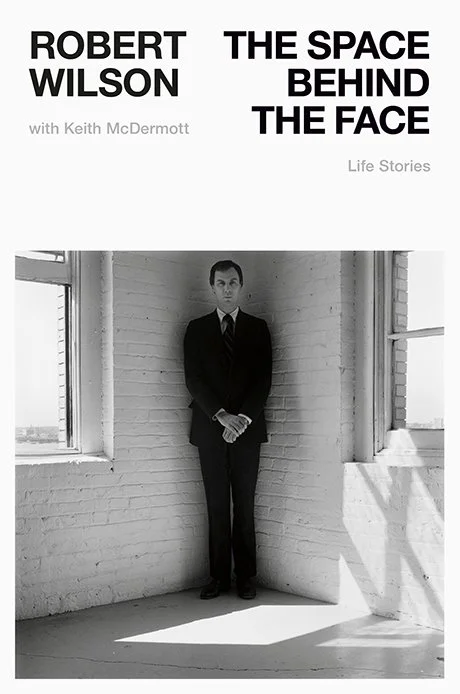
Today is not only Election Day—it also marks the publication of Bob’s memoir, “The Space Behind the Face.” Written with his longtime friend and collaborator Keith McDermott, the book brings together stories in three parts: Portrait, Still Life, and Landscape.
Bob would surely have been proud to see the book published, though he had long been reluctant to write an autobiography. Once he and Keith began working together, however, the stories soon flowed, as Keith recalls in his essay for Vanity Fair:
“Bob was a storyteller. Everyone who knew and worked with him was familiar with his stories, often told in a regional Texas twang and often more than once – and occasionally with a remarkable addendum. ... Once we gave up the chronological approach and Bob, unburdened by the need to deliver “The Story of My Life,” began to think in terms of “Life Stories,” our process relaxed and stories flowed. In addition to scheduled sessions, I could collect them everywhere, because Bob told them everywhere: at dinner parties, in the car, over the coffee and English muffins I began to deliver early each morning, or on our daily golf cart trips around the Watermill grounds. I always met him armed with my tape recorder.”
Writing for Wallpaper*, Stephanie Murg explores how Wilson’s distinctive style translates from stage to page:
“Wilson described the highly visual nature of his work for the theatre as a means of making it accessible on its surface, ‘so that someone formally educated or someone from the moon can come into the theatre and appreciate something’. This approach is transposed from the stage to the page through sprightly stories in unvarnished prose. What emerges is signature Wilson, at once vividly personal and starkly pure.
Most striking is how Wilson’s superpower of isolating essences carries through to the written word. His encounters with cultural figures ranging from Philip Johnson and Finn Juhl (in whom a 21-year-old Wilson recognised a fellow lover of chairs) to Marlene Dietrich and Lady Gaga are concentrated into radiant details, as is a brush with former US President George HW Bush – craving ice cream, reading Vogue, and clad in red pyjamas on an overnight flight to Paris.”
Kirkus Reviews calls the memoir “A revealing stroll through a boundary-smashing career,” adding:
“As the anecdotes pile up, we see that the director is as good at communicating with people previously thought unreachable due to physical or mental disabilities as he is at schmoozing with the rich and famous who can help his career or give him money. We also get a good understanding of his artistic credo: His visually based works are shaped by light and space, not words, and he prefers “abstract” performers who focus on physical movement and keep their emotions “interior” to the conventional theater he dislikes because it gives you “no time to think.” Wilson’s eloquent statement of principles may well interest even readers who don’t necessarily care for his kind of challenging art.”
In Bookforum, Gerald Howard captures both the book’s significance and the pleasure of reading it:
“As we will see, the word “memoir” is something of a stretch for the book’s contents. But it is by far the fullest piece of personal testimony that [Wilson] has ever provided. For anyone with the least interest in this hero of our culture and genius of the downtown and international avant-garde, which presumably includes all readers of Bookforum, it is a book of immense and urgent importance. And, let me say up front, a whole lot of fun to read on multiple levels. “I like to tell stories,” Wilson declares early in his book, and he is very good at it.”
Click the image to order